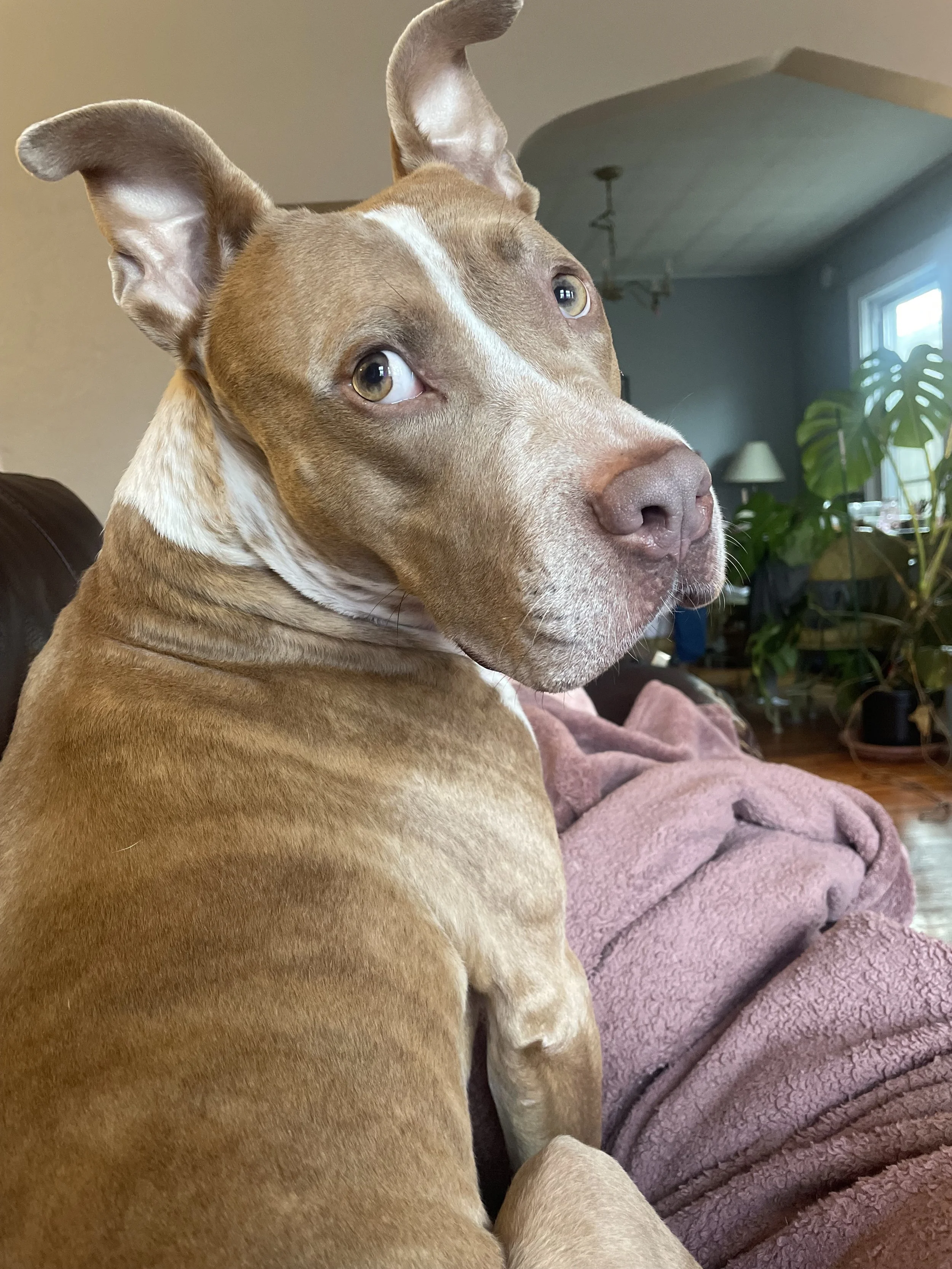
The Project Dog: Arby’s Story
Welcome! We are so happy to have you join us for The Project Dog Series, let’s kick this off with an introduction.
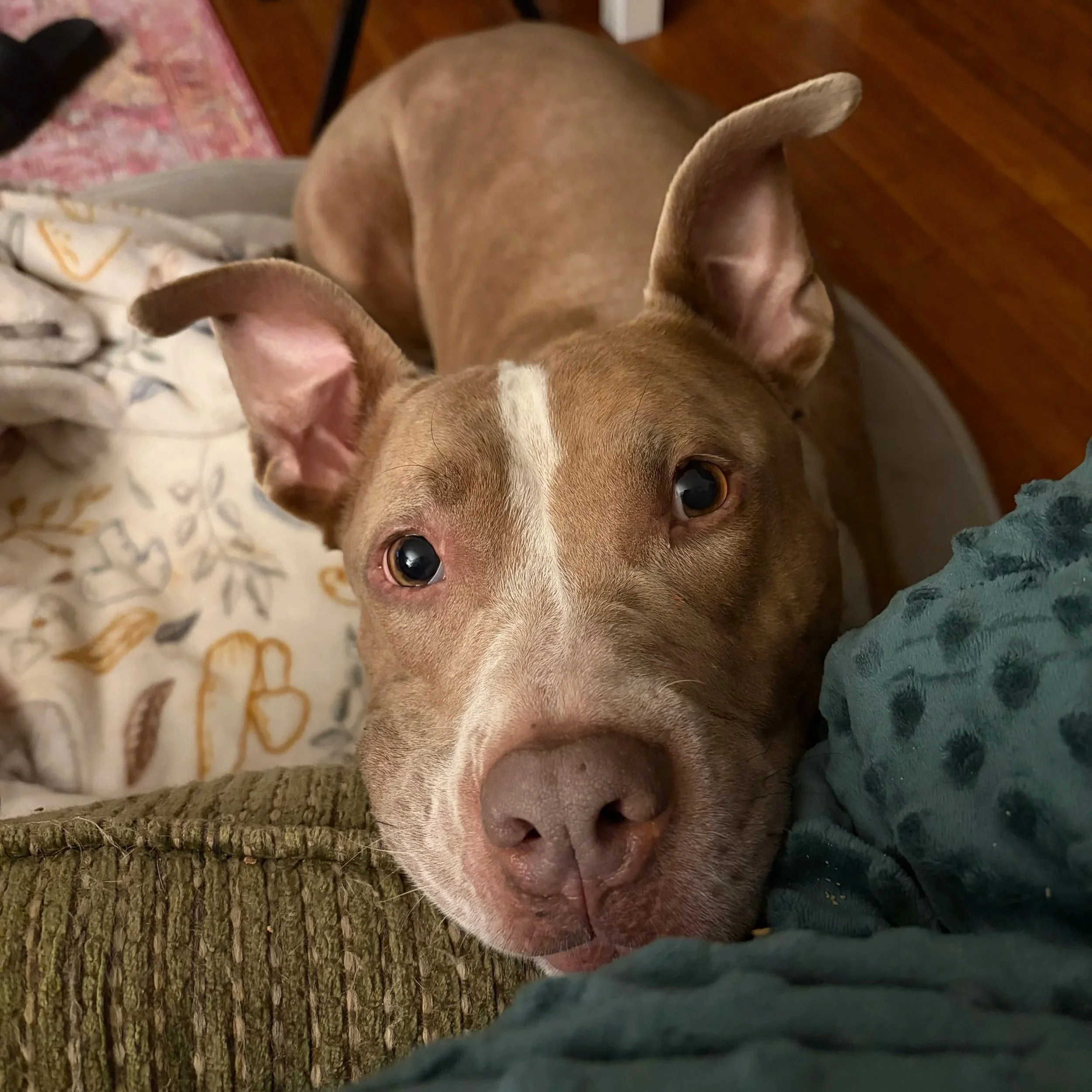
My name is Laurissa, and my dog’s name is Arby! He’s an American Bully who often gets mistaken for a hippo, manatee, dinosaur, or piglet. He’s one of those 75 pound lap dogs who is not afraid to body slam you (out of love). He loves tennis balls, nose work, and any kind of stuffy toy. He has an evil alter ego named Arbus, who comes out when he gets a little too excited or frustrated.
This has all the makings of a great story, lovable lap hippo with an alter ego, I’m hooked already. Can you take us back to the beginning of Arby’s story?
I was a foster for a little bit with Buffalo Underdogs Rescue, and in January of 2022 they posted a request on Facebook for someone to foster a young adult male dog who had been a long term resident at the City of Buffalo Animal Shelter. The post mentioned that he was not handling shelter life very well, and was starting to get depressed. I’m not sure exactly how long he was there, but I do know it was about 2 months. During that time, he was adopted and almost immediately returned. They mentioned he had some resource guarding issues as well. When I saw the post, I immediately volunteered. I had just finished fostering a 12 week old puppy, so an adult dog seemed like slightly less of a commitment (that irony is not lost on me). It took me less than a week to foster fail! I had grown up with dogs all my life, but Arby is my first dog of my own. I just couldn’t resist him. He was so affectionate, snuggly, and I could tell he was just craving a calm environment. He slept for almost 2 full days when I got him home from the shelter, so I could tell just how stressed and unsettled he had been. When I was deciding to keep him, I also couldn’t help but think he was going to be kind of a hard sell when trying to get him adopted, based on his history - resource guarding, and the fact that he’s your stereotypical, beefy pitbull with questionable behavior. I honestly didn’t trust that he wouldn’t get adopted and returned again, and I couldn’t stand to think about how that would affect him. I hadn’t really pieced it together at the time, but something in me knew that he was going to be a Project Dog no matter what. Instead of putting him through the adoption process again, I decided he was already adopted and he’s been my #1 guy ever since.
It sounds like you were just the right fit for Arby, but even when we fall in love with a dog, behavior challenges can be difficult to live with. How have Arby’s challenges impacted your day to day life?
The biggest challenges I have faced with Arby aren’t really his fault at all. In my daily life I struggle a lot with executive dysfunction. I was diagnosed with inattentive-type ADHD right around the time I adopted Arby, so while I was trying to understand his patterns of behavior he actually was instrumental in helping (or forcing) me to understand myself. I quickly learned that Arby was not the kind of dog I could just take on low-key walks where I could zone out while he did his own thing. “His own thing” often still consists of trying to knock cyclists over, lunging at other dogs, and even picking fights with school busses as they pass by. Every time we step outside I have to say a prayer that no one has their dog off-leash. Needless to say I was unprepared for the level of focused attention verging on hyper-vigilance required to make sure both of us, as well as everyone around us, remains safe. As much as I love him, he is kind of a living nightmare for someone with my specific brain chemistry. He is not a “set it and forget it” kind of dog. He needs constant attention and he’ll let you know it - which, for someone with a disordered attention span, can be overwhelming. His evil alter ego, Arbus, is very vocal and loud when he’s frustrated or hasn’t had his daily sniffs around the neighborhood, and it can get very overstimulating very quickly. He’s the kind of dog that thrives on strict rules and routine, with a mom who is chronically unable to keep them. He has forced me to set these things up in my life to keep him feeling safe and happy, and as it turns out, those things also make ME feel safe and happy. It sounds kind of obvious, but despite the huge mental load that it requires, taking care of Arby has also taught me a lot about taking care of myself.
So in an effort to meet Arby’s needs, you found a way to also meet yours. It’s amazing when our dog’s give us exactly what we need, even if we didn’t realize we needed it! You really faced some big challenges early on; Looking back to those early days, would you have done anything differently?
I would prioritize his needs over my wants. Of course everyone who gets a dog wants them to be friendly and love being around people and other dogs. In the beginning, I thought more socialization was always better, so I would always let people pet him on walks thinking he needed as much friendly interaction as possible. I didn’t realize until later that these interactions, even when he held it together, were extremely stressful for him. I also used to take him to dog parks a lot, which I thought was good for his socialization, too. Turns out, an uncontrolled environment with other unpredictable dogs is NOT a good way to socialize a dog with emotional regulation issues. I would also, in a similar vein, tell myself to get really, really comfortable with potentially coming off as rude to other people if it means protecting Arby (and sometimes, the other people!). For example, I used to feel this need to over-explain when people asked if he was nice and if they could pet him. I was so preoccupied with him not living up to the Pitbull stereotype that I would try and explain that “he IS nice but he gets scared of people and then he barks and lunges…” Meanwhile, he’s actively barking and lunging at this person who has already stopped listening to what I’m saying. Now, I answer with a simple “No, he’s not nice!” and am okay with it. He’s never bitten anyone, but random people don’t need to know his whole backstory, nor do they probably care! It’s okay to oversimplify an answer in the moment for the sake of everyone’s safety. This has been especially important since I live near a public park, and even though I strategically try to walk during school hours or at night, I have more than once had to yell at kids who start running toward him wanting to pet him. I’d rather make a scene yelling “HE’S NOT NICE” at someone’s kids, potentially being seen as rude, if it means I can avoid a worst-case-scenario involving my dog biting a child. (Side note- teach your kids to never run up to dogs! Everyone will be happier!)
I think a lot of people will be able to relate to these things, I know I have personally had to learn how to yell at strangers in an effort to advocate for my dog. We have loved learning more about your early days with Arby, but now we are ready for the really good stuff. What do you love most about sharing your life with him?
The best thing about sharing my life with Arby is that he is constantly reminding me of how far we have both come together. I know every dog owner says some version of this, but it feels like we were meant to help each other. I love the way he curls up like a croissant in bed and somehow is able to put all of his body weight on top of me without actually being on top of me. I love that even after the most exhausting days, he forces me to go be outside, which is something I love to do and always makes me feel better. I love going to his weekly nose work class and watching how far he’s come. I love watching him play and be goofy because he still acts like a puppy sometimes. I also love forcing my friends and coworkers to look at pictures of him. I will never stop doing this. Despite the struggle, he brings me so much joy every day.
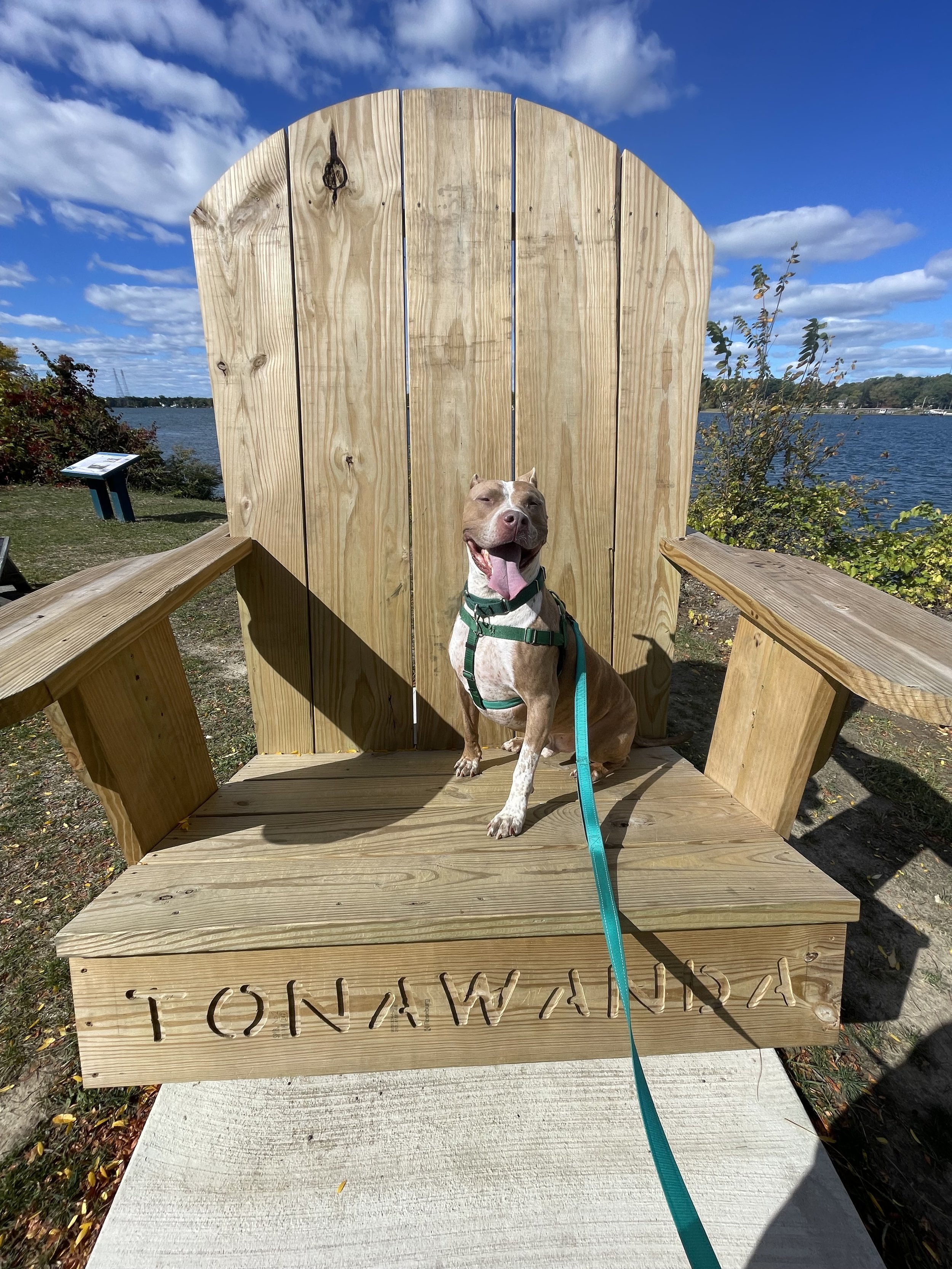
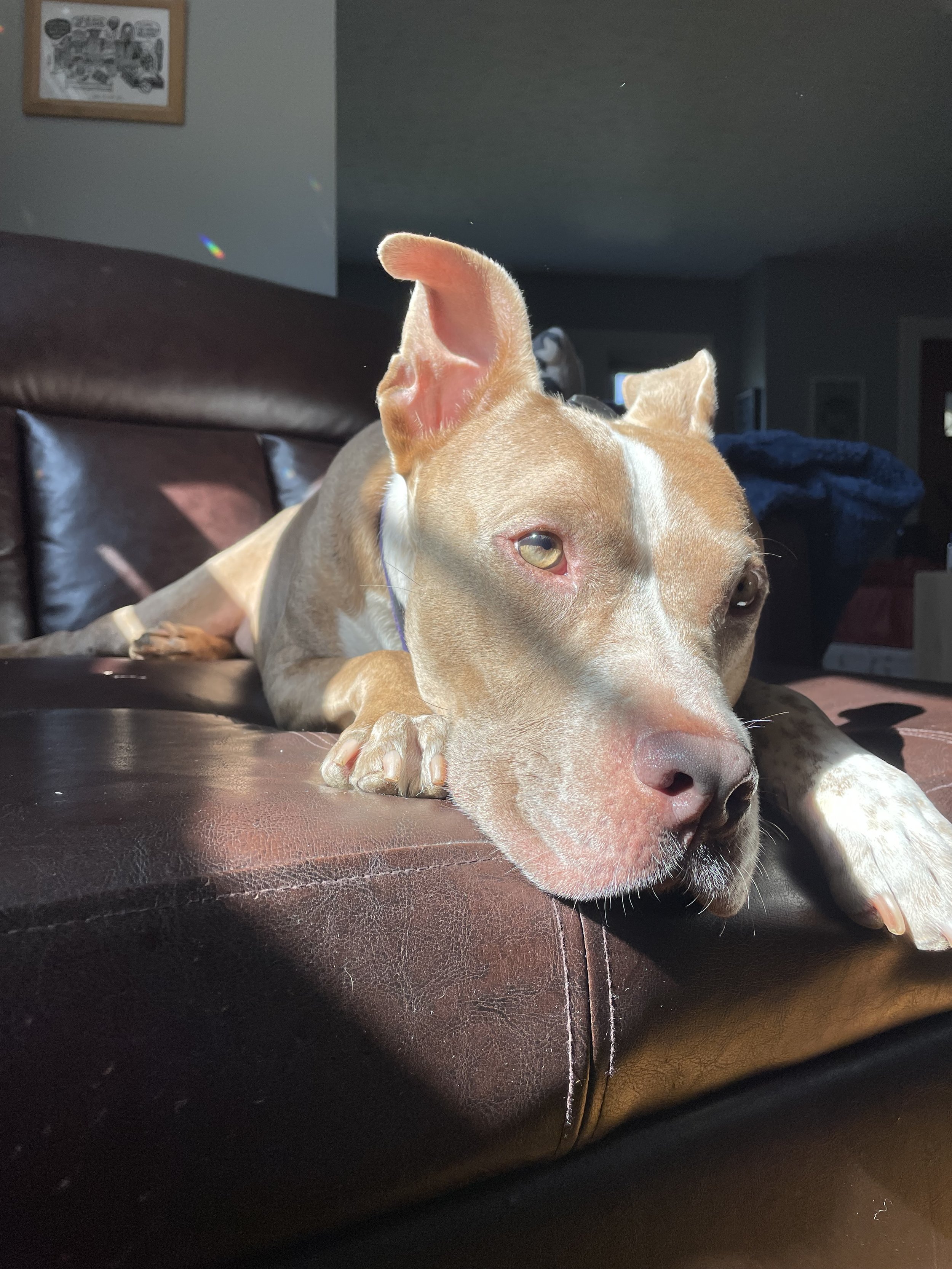
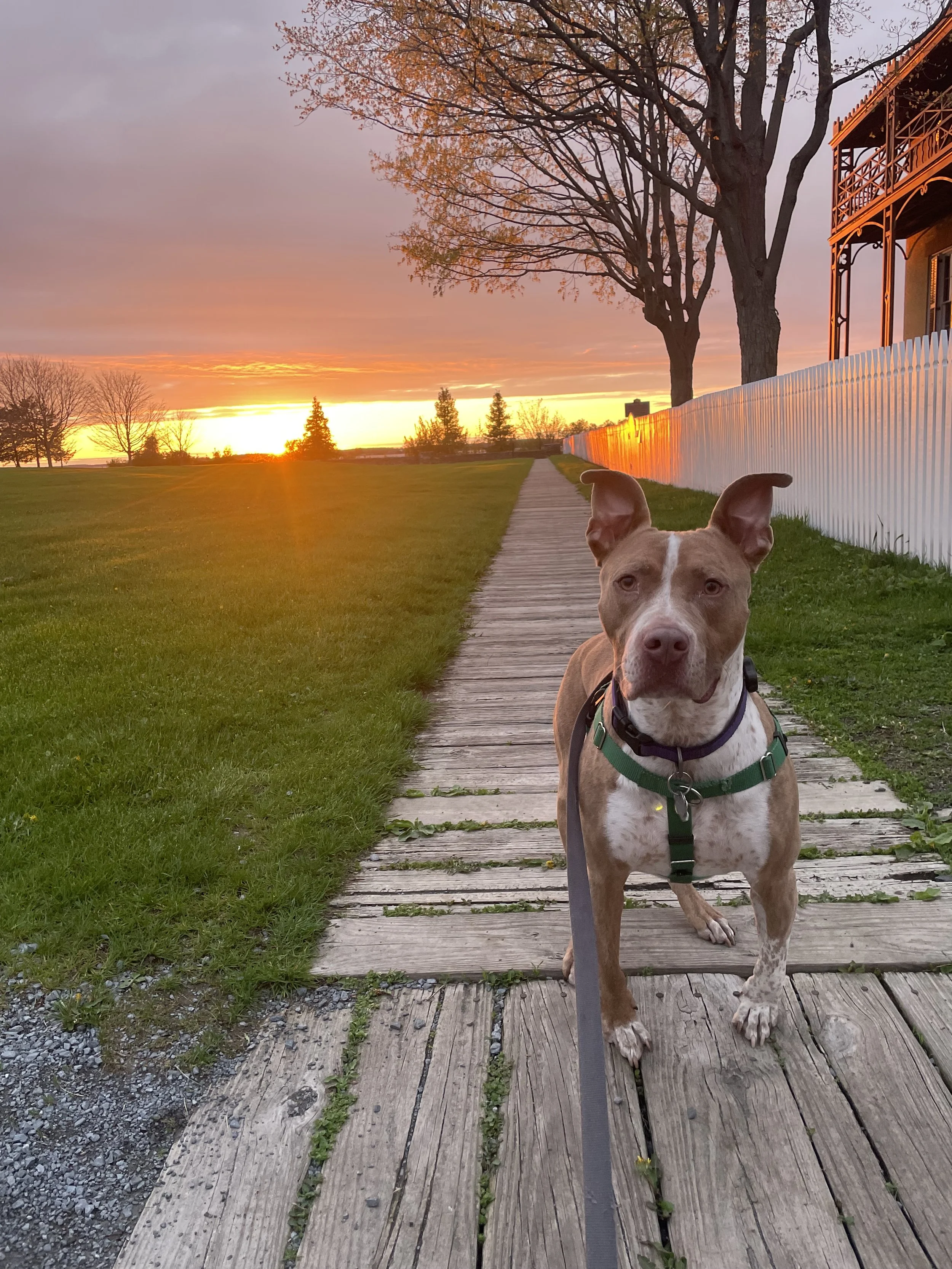
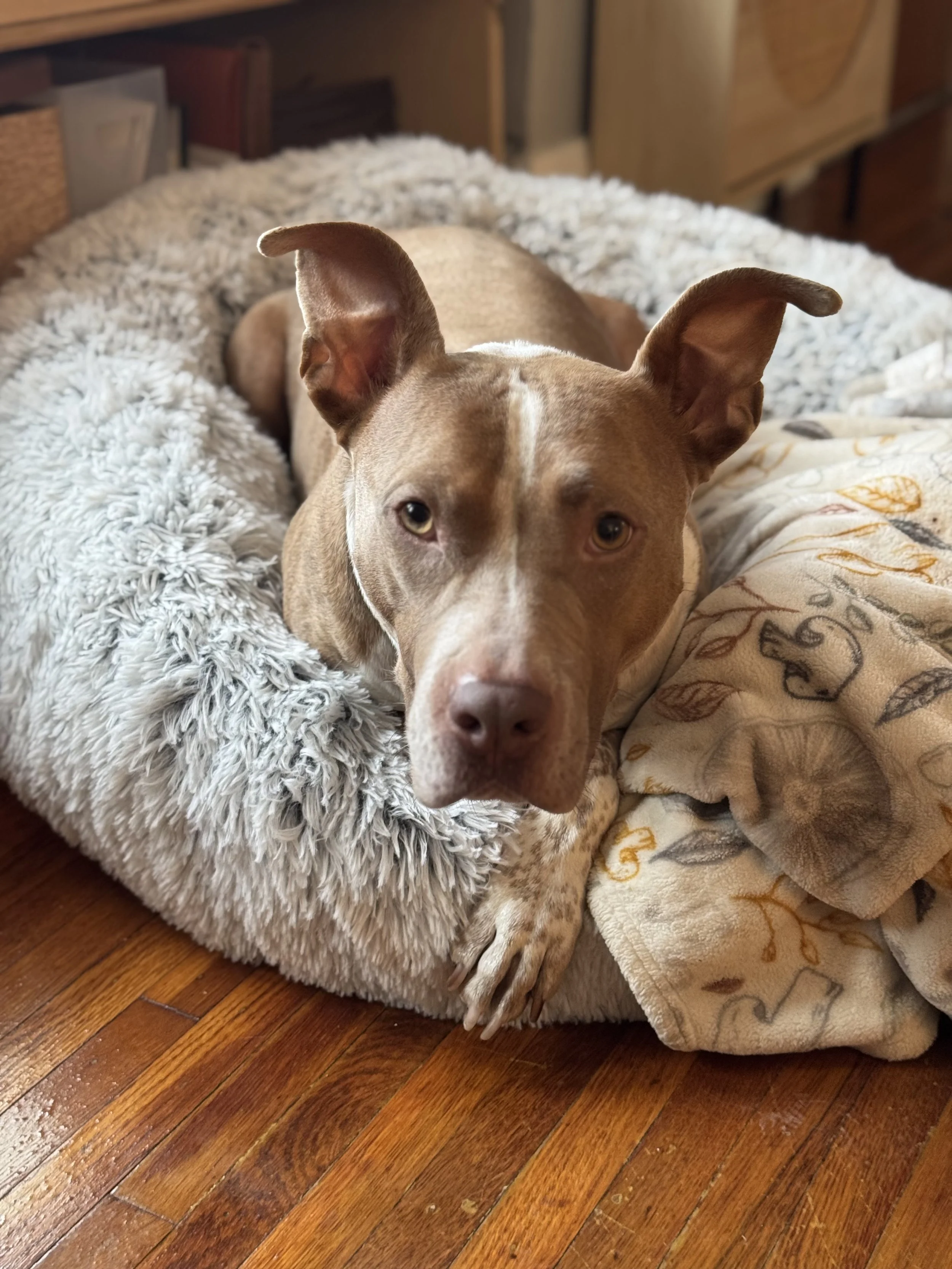
This is a fantastic list, a love to letter to Arby really. And we certainly can’t fault you for forcing this adorable face on others, we would be happy to see more cute Arby photos any day of the week! We love to focus on the good days, but I’m sure that like all of us, you have some bad days now and again - how do you handle those days?
I definitely don’t always handle them well. I tend to judge myself harshly for not having the learning curve figured out. I have learned to lighten up on my own expectations I place on myself. I have to remember I’m not a professional dog trainer, so I don’t actually have to beat myself up for all the times I say “I don’t know what to do, I don’t know how to handle this.” I’m not failing any kind of “test” if I don’t feel like I handled every single scenario correctly. I’m not re-traumatizing him or making him worse because I forgot to take treats on one walk and had to physically restrain him more than normal. I don’t actually have to listen when the random people he’s barking at tell me I need to train my dog better. I’m not a monster if I give him a big frozen Kong in his crate at times when he can’t settle down because I don’t have the mental bandwidth to keep him occupied. And while I’m over here beating myself up for being a bad dog mom, 9 times out of 10 Arby has already moved on to something else (probably just asking for more treats). Of course I look back and wish so much that I had done things differently. I wonder what life would be like if I had discovered positive reinforcement, force-free training sooner. I can’t help but think I way over-socialized him and pushed him out of his comfort zone too quickly and that’s why he is the way he is now. It’s hard not to play the blame game with myself knowing what I know now, about what actually works for him and what makes him worse. But I have to remind myself to look at the big picture: yeah, maybe I’ve made mistakes, but it’s been 4 years and nothing really terrible has happened. He’s not (despite my joking) an actual menace to society. In fact, we’ve both only gotten better and better. If I adjust my expectations and give myself a little more grace, it’s easier to see the bad days as just another day. I also think the bad days make the good ones that much more obvious. Recently I took him over to a friend’s big yard to run around in the snow. He was able to walk up her driveway toward her, sniff her pants, and then walk past her into the yard. When I tell you that’s HUGE, I really mean it. Like I said before, he’s a big fan of body slamming. At the end of every day, good or bad, he’s still my chonky, snuggly guy taking up way too much space in the bed.
Can I tell you a secret? Professional dog trainers don’t get it right all the time either! Humans are really good at making mistakes, and caring for a reactive dog, we are guaranteed to make plenty. But it sounds like you have learned a lot and made a lot of progress! Having these experiences over the last 4 years, has your perspective changed at all in regards to reactivity?
I have gotten over the idea that the end goal of reactivity management is the end of reactivity. I used to believe that fear and reactivity could always, eventually, be “cured” with the proper training, desensitization, etc. While that might work out for a lot of dogs, I don’t think Arby is one of them, and that’s ok. It’s yet another example of how he’s helped me understand my own cognitive limitations. For me, no amount of planning, setting reminders, writing things down, getting good rest, or medication (to name a few) will take away the fact that I have ADHD. In fact, I do all these things BECAUSE I have ADHD, in order to make my own life manageable so I can function in society. These things won’t cure me because this is just how my brain is wired. Similarly with Arby, the reactivity management isn’t a cure for his reactivity, but it helps both of us learn how to live with it. It’s about trying to shift from constant damage control towards actually enjoying life. I’ve also gotten used to the progress not being linear - which is true for any personal journey. Some days he’s a perfect, well behaved boy who responds to all of my cues and is able to hold it together while we watch another dog pass by on the other side of the street. Other days, he better not see a single other living creature within two blocks of us walking or he turns into an uncontrollable beast. One doesn’t cancel out the other, though, and it really shows that dogs do have their own personalities and feelings and aren’t just trainable robots that do whatever we want them to. He’ll probably never be a patio dog, and I’ll probably always have to put him away in another room when there are people over. I’ve accepted that if I want to go anywhere in public and be carefree about it, Arby is not invited. He may never have another dog-friend (but I will never stop hoping this could be a possibility). I’ve decided he’s just not allowed to interact with children, ever, because he doesn’t need to. And that’s okay. It doesn’t mean I’ve failed or given up trying. A dog doesn’t have to have the perfect disposition to still be a good dog.